Give time back to the team.
Connect two tools so information is entered once. Turn paper checks into a field form. Assemble the recurring report from its source records.
Measure repeated entry, time per task or corrections.
AI consulting and custom operations tools.
Built around the way you work.
20 minutes with Jason Gardner, in Binghamton.
You’re told you need AI to stay competitive. The useful question is where it can make a difference in your business.
I help owners and operations teams turn critical spreadsheets, disconnected software and repeated manual work into tools that fit. We start with a real problem, use what you already have, and build what’s missing.
A spreadsheet contains more than data. It holds the rules, judgment and workarounds that keep the business moving. A custom tool can preserve that knowledge and make it easier for everyone to use.
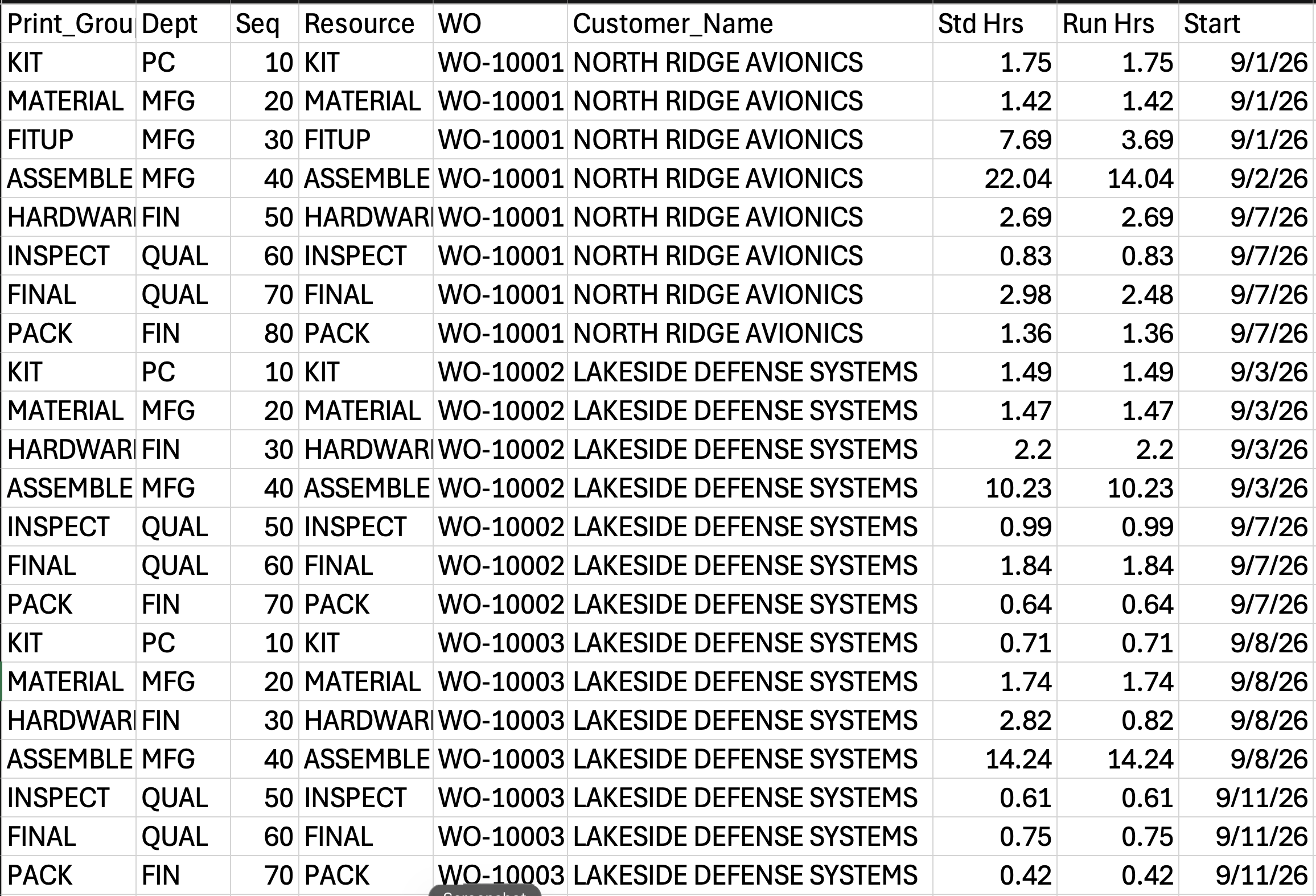
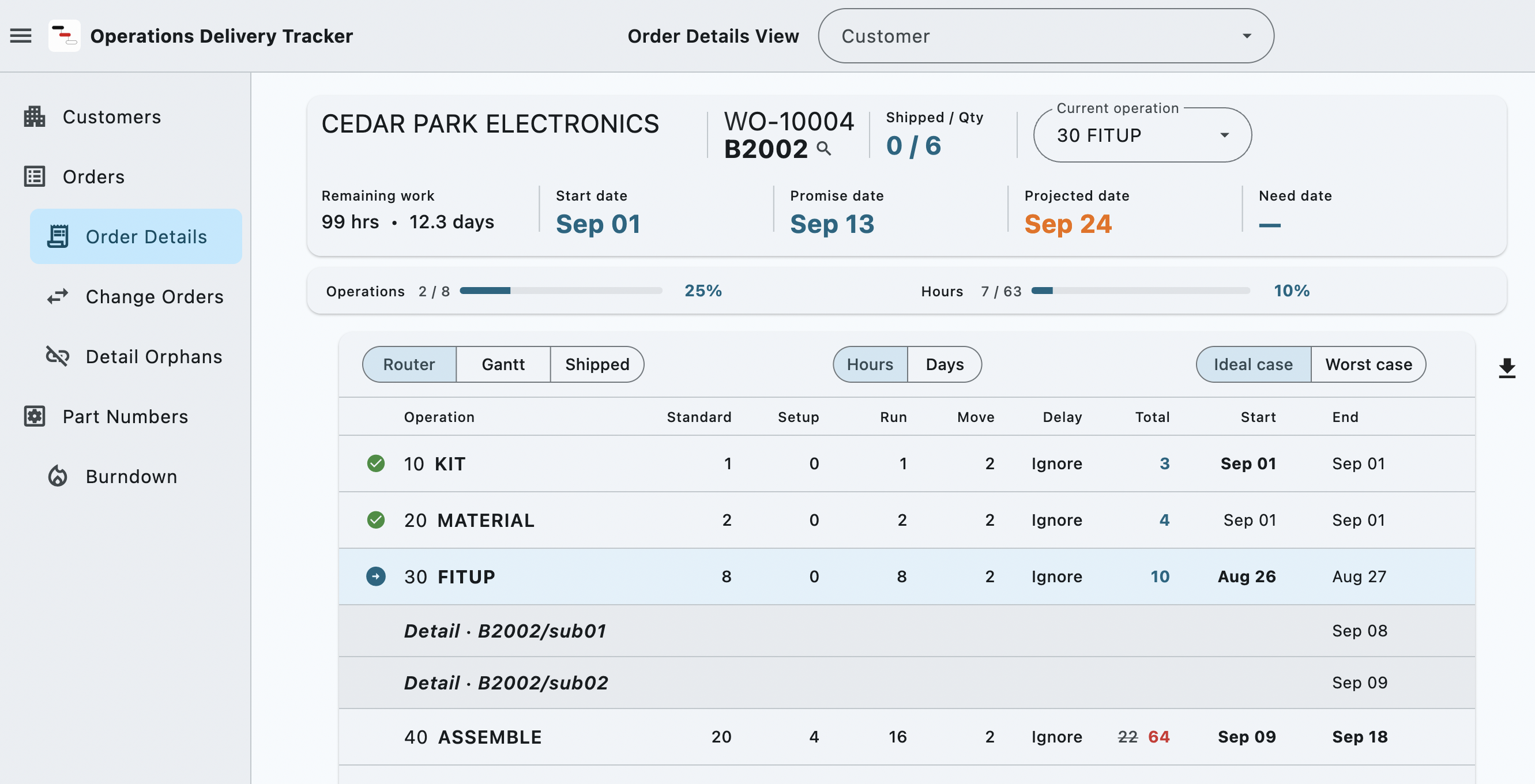
A customer needs a date. The answer depends on the remaining work and the parts it is waiting on. Bringing those together lets a planner see the consequence of a delay before making a commitment.
This is one example of the work I build: turn an operational question into a tool someone can use to make a decision.
Explore the manufacturing exampleInteractive illustration · Synthetic data
2 days ahead of the promise
The component is available when fit-up needs it. The remaining work can proceed as planned.
Simplified example: a six-day component delay moves the remaining work by six days. A real tool uses your calendars, capacity and dependencies. The team decides how to respond.
Less time chasing information. More work reaching a quote or completion. A clearer view of the operation. We choose a measure that matters to your business, then use it to judge the result.
Connect two tools so information is entered once. Turn paper checks into a field form. Assemble the recurring report from its source records.
Measure repeated entry, time per task or corrections.Build a quoting tool around your pricing rules, give inquiries a clear owner, or connect your website’s intake to the next step in the business.
Measure time to quote, follow-through or completed work.Bring jobs, capacity, inventory or exceptions into one useful view—with a way to assign, update or resolve them.
Measure overdue work, missing updates or time finding an answer.A useful first project can be small: configuring software you already own, a website improvement, or one reliable integration. Custom development is there when the work needs it. Explore the economics of a project.
AI changes what we can build. Your business determines what we should build.
I use AI throughout development to explore approaches, create an early working version and work through the details. That makes it possible to test a focused idea before committing to a larger system. A prototype helps us learn; it still needs engineering and testing before the business depends on it.
Sometimes AI belongs inside the finished tool: reading an incoming document, suggesting structured information, or preparing a draft for review. Sometimes the best result is ordinary software with clear rules, reliable calculations and a good interface.
Prices, permissions and commitments need deliberate controls. We decide where AI can assist, where a person approves, and where the same input must produce the same answer.
My business is making AI work for yours.
I’m Jason Gardner, founder of contextFound, here in Binghamton. My background combines industrial and systems engineering, hands-on operations and software development.
I’ve worked in industry and at software companies, including with private-equity-backed manufacturers. Manufacturing is a strong part of my experience; the broader work is helping people run their businesses with better tools.
I’m interested in the handoffs, the exceptions, and the things your people have learned to work around. You know your business. I bring the questions and the ability to build.
You work directly with me, from the first conversation through implementation and handover.

We look at one real workflow, including an ordinary day and the cases that go wrong. The people doing the work help shape the solution.
Before implementation, we agree on the scope, price, responsibilities and what a working result must do. If the problem needs deeper investigation, we define that discovery work separately.
Chambers. Small-business advisors. Manufacturing organizations. Portfolio operations teams.
If a member or portfolio company is asking “What should we do with AI?”, a specific business problem is a useful place to start. I’m available for a focused workflow review, a practical discussion with your group, or a scoped implementation.
A good introduction is a business with a recurring manual process, a spreadsheet people depend on, or a gap between existing systems—and someone ready to own the improvement.
You should be able to explain the fit and the next step. Discovery produces a clear problem definition and proposed approach; implementation has its own deliverables and acceptance criteria.
Discuss a business or a group sessionBring one workflow that is harder than it should be. We’ll talk about what it needs to accomplish, who relies on it and where the work gets difficult.
After the 20-minute conversation, I’ll send a short Workflow Opportunity Brief: the problem as I understand it, a possible direction, the open questions and a practical next step. It’s yours to share, whether or not we build together.
Book a 20-minute conversationFree introductory conversation. No obligation to commission a build.